 |
 |
|
|
|
|
|
Today's Bézanères in France
It appears that after having been relatively numerous in France in the last century, the Bézanères are now on the endangered species list. They have small families, often only one child, mostly girls. The name runs the risk of disappearing. Amongst the current males, there are two bachelors of more than fifty years of age.
|
|
|
|
|
|
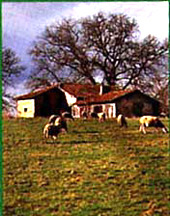
Almost all reside in the department of Haute-Garonne within a area of 20 km around Savères, France. Mrs Marie-Renée Colin's, née Bézanère, grand-father was born there in 1869. All those she has spoken to while conducting her research were interested in hearing about the branch of Besners in Canada.
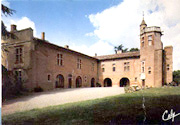
The total population of today's Savères is about 150.
 |
 |
|
|
|
|
|
|
In the course of France's history, the south was for a long time a country of it's own: the Kingdom of Navarre, we have seen, contested for a long time the Parisian directions. Not surprising, that Gascogne was the country of cloak and dagger; the country of Cyrano de Bergerac who declaimed his boasting monologue to the "young of Gascogne"; neighboring country to Spain who passed on the tradition of the bull fight, country of good food, good wine, of "foie gras" and Armagnac (brandy).
 |
|
|
Holding on to age-old traditions, this region is, today, a polycultured region and few animal rearing , except for poultry: geese and ducks mostly for the "foie gras". The population density is weak and large cities rare, except for Toulouse which is the forth largest city in France, the city of aeronautics, key industries and an important University.
 |
|
|
|
|
|
|
 |
|